 Principal Investigator
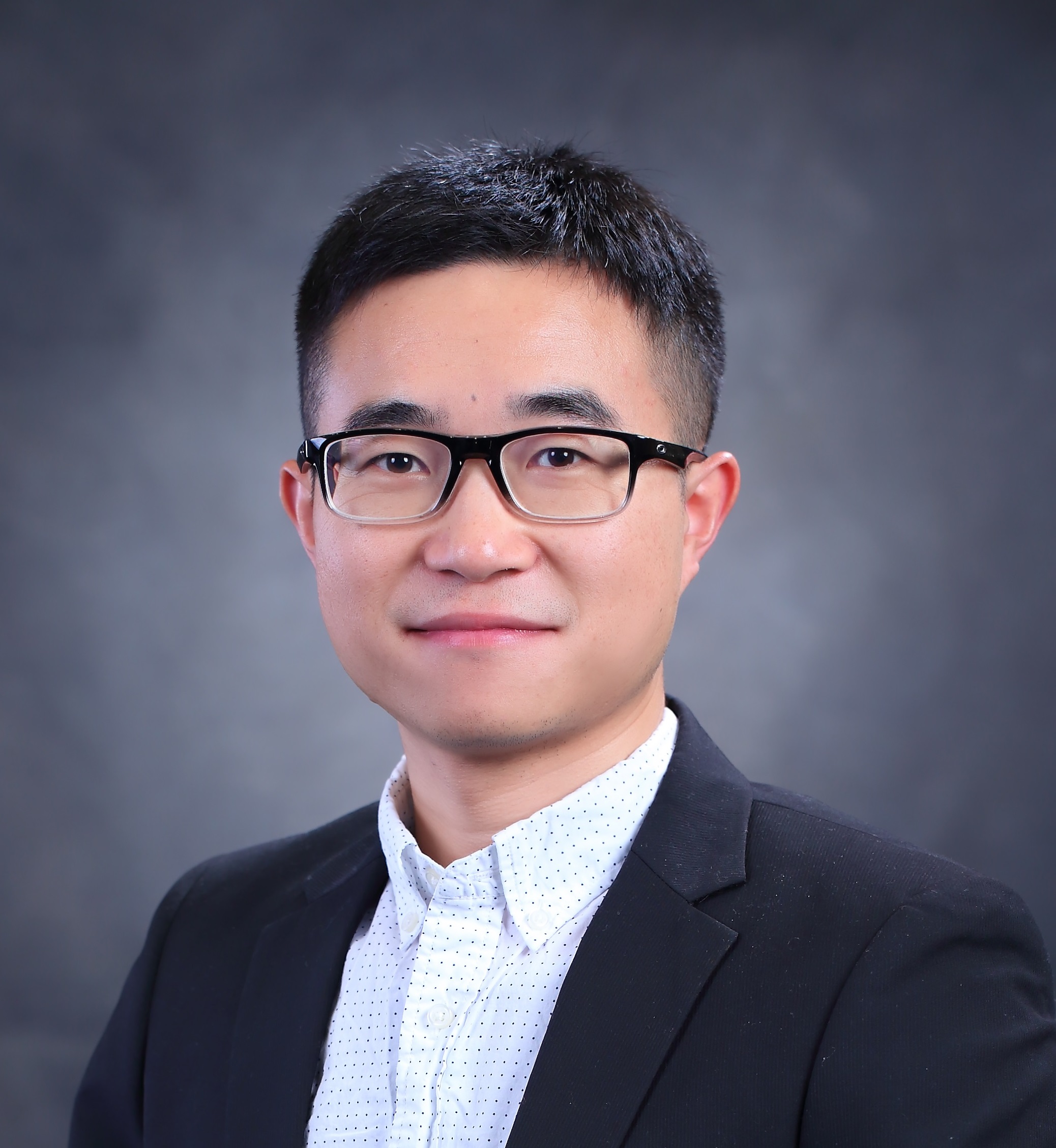
Dr Kang Wang (王康研究员,课题组长)
CAS Key Laboratory of Photochemistry,
Institute of Chemistry Chinese Academy of Sciences (ICCAS)
Contact Us
Address: No. 2, 1st North Street, Zhongguancun, Haidian district, Beijing 100190, China
地址:北京市海淀区中关村北一街2号
Tel: 010-62535028
Email: kangwang@iccas.ac.cn
About Us
Welcome to the "Advanced Light-Emitting Materials and Devices" group. Our focus revolves around the development of innovative, solution-processable light-emitting materials, emcompassing organics, organic-inorganic hybrid perovskites, quantum dots, etc. We aim to explore their potential applications in various light-emitting devices, including but not limited to light-emitting diodes, optically pumped nanolasers, and utimately advance towards electrically driven lasers. Additionally, we are dedicated to unraveling the intricacies of exciton/carrier dynamics within those materials and devices. Through our collective efforts, we envision to revolutionize how we illuminate spaces, dsiplay information, and communicate optically in the future. If you share our enthusiasm and are interested in joining our group or collaborating with us, please feel free to reach out.
Group News-2026
2026.01.08 AM paper published
Xinyu's paper, "Suppressing Exciton-Polaron Annihilation in a D-π-A Organic Semiconductor towards Electrically Pumped Lasing", in collaboration with Prof. Boning Wu (DICP) and Prof. Wenming Tian (DICP) has been published online in Adv. Mater. Thank all the collaborators for the generous support and congratulations to the team.
In this work, we demonstrate the effective suppression of exciton-polaron annihilation in a D-π-A-type gain material with spirofluorene backbone, aiming toward electrically pumped lasing. The D-π-A molecule was rationally designed and synthesized by taking inspiration from a high-performance D-π-D-type gain material. The resulting compound delivers slightly higher but still ultra-low lasing threshold when integrating with a high-quality distributed feedback resonator. Benefiting from the introduction of electron-withdrawing group, the carrier mobilities of the modified materials are markedly enhanced and more balanced compared to the pristine D-π-D system. In organic light-emitting diodes (OLEDs) based on this material, efficiency roll-off is clearly suppressed, which might be attributed to the balanced charge transport and the inhibition of polaron accumulation, as evidenced by time-resolved electroluminescent (Tr-EL) measurements. More importantly, electrically pumped transient absorption (E-TA) spectroscopy confirmed the mitigation of polaron-induced nonradiative losses in the operating OLEDs, which is beneficial for maintaining population inversion and achieving optically pumped lasing. Our work provides molecular insights into the long-existing but overlooked polaron-related loss issues towards the pursuit of EPOLs. Read the full story here.
Group News-2025
2025.09.03 New postdoc
Dr Guigui Ye joined us as a postdoc. Dr Ye recieved her PhD degree from Wuhan University in organic chemistry under the supervision of Prof. Qianqian Li and Prof. Zhen Li. She will work on light-emitting organic semiconductor-incorporated perovskites. Welcome to the group and look forward to working together!
2025.07.15 New Group Members
Jun Qu, Zhihan Qin, Hailiang Song, and Jun Gao joined us as graduate students.
Jun Qu recieved his BS degree from Qufu Normal University. He will be co-advised with Prof. Yong Sheng Zhao and work on electrically driven lasing materials and devices. Zhihan received his BE degree from Xi'an Technological University. He will be co-advised with Prof. Yong Sheng Zhao and work on excited states in strong coupling materials and devices. Hailiang obtained her BE degree from Xi'an University of Technology. He will work on organic/perovskite light-emitting diodes. Jun Gao recieved his BE degree from Wuhan Institute of Technology. He will work on hybrid perovskites and lasers. Welcome to the group and look forward to your fruitful gradute student career!
2025.05.01 New JACS paper
Shiyang's paper, "Nonreciprocal Circularly Polarized Lasing from Organic Achiral Microcrystals", in collaboration with Prof. Yong Sheng Zhao (ICCAS) has been published online in JACS. Thank all the collaborators for the tremendous support. Congratulations.
In this work, we present nonreciprocal CP lasing from achiral organic microcrystals through the coupling between fluorescence linear anisotropy (f) and linear birefringence (LB), known as f-LB effect. By carefully controlling the crystallization process, we prepared triclinic and orthorhombic polymorphs with distinct molecular packing arrangements, which unlock the precise manipulation of f-LB coupling for efficient polarization state conversion of photons. The triclinic crystals exhibited stronger f-LB effect owing to the suitable angle between the emission plane and birefringence axis, resulting in robust nonreciprocal CP luminescence. More importantly, this coupling was further amplified during lasing oscillation, ultimately enabling nonreciprocal CP lasing with a dissymmetry factor of ∼1.0. These findings provide a novel approach to exploring high-performance nonreciprocal CP lasers and offer new insights into chiral photonics and optoelectronics. Read the full story here.
2025.04.23 New Publication
Qingxiang and Xinan's paper, "Spacer cation enabled dimension control for efficient and wavelength-tunable blue perovskite light-emitting diodes", in collaboration with Prof. Letian Dou (Purdue ChE) has been published online in ChemComm. Thank all the collaborators for the tremendous support. Congratulations.
This study explores a conjugated spacer molecule, biphenylethylammonium bromide (bPEA), to enable efficient dimension control in quasi-two-dimensional perovskites for blue light-emitting diodes. The incorporation of bPEA improves the optoelectronic properties, thereby delivering a peak external quantum efficiency of 7.0% at 483 nm and tunable emission from 493 to 466 nm. Read the full story here.
This paper is featured in the themed collection, and Dr. Wang is highlighted as 2025 Emerging Investigators.
2025.03.10 New Group Member
Mingchuan Wei joined us as a Master student. Mingchuan recieved his BSc degree from Shandong University. He will work on molecular emitter-based hybrid systems. Welcome to the group and look forward to working together!
Group News-2024
2024.12.30 Collaborated Paper Out
The collaborative paper with Prof. Letian Dou (Purdue ChE) led by Sung-Doo and Wenhao has now been published in Nature Communications. A unique grain engineering methodology was reported to improve light outcoupling and passivate defects in perovskite LEDs. Congratulations.
2024.11.12 New Group Member
Qingxiang Liu joined us as a PhD student. Qingxiang recieved his BE degree from Shandong University of Science and Technology, and MS degree from ICCAS (Key Laboratory of Molecular Nanostructure and Nanotechnology) with Prof. Jinsong Hu, Prof. Huijuan Yan, and Prof. Dingjiang Xue. He will work on perovskite LEDs. Welcome to the group and look forward to your fruitful Ph.D career!
2024.9.11 New "Nature" Paper Published
The paper entitled "Two-dimensional-lattice-confined single-molecule-like aggregates" has been published online in Nature. This work is supervised by Prof. Letian Dou (Purdue ChE) and in close collaboration with Prof. Brett M. Savoie (Purdue ChE, now at Notre Dame), Prof. Peijun Guo (Yale), Prof. Vladimir M. Shalaev (Purdue ECE), Prof. Alexandra Boltasseva (Purdue ECE), Prof. Yong Sheng Zhao (ICCAS), and Dr. Chenhui Zhu (LBNL). Thank all the collaborators for the tremendous support. Congratulations to the team.
Here, we discovered an unprecedented phase of molecular aggregate that forms in a two-dimensional hybrid perovskite superlattice with a near-equilibrium distance, which we refer to as a single-molecule-like aggregate (SMA). By implementing two-dimensional superlattices, the organic emitters are held in proximity, but, surprisingly, remain electronically isolated, thereby resulting in a near-unity photoluminescence quantum yield, akin to that of single molecules. Moreover, the emitters within the perovskite superlattices demonstrate strong alignment and dense packing resembling aggregates, allowing for the observation of robust directional emission, substantially enhanced radiative recombination and efficient lasing. Read the full story here.
This work is also highlighted by Purdue, China Science Daily, Notre Dame, etc.
2024.8.12 New Group Members
Zhijiang Song, Leshen Lin, and Yangyang Zhang joined us as graduate students.
Zhijiang recieved his BE and MS degree from Liaoning Technical University and Zhengzhou University, respectively. He will work on circularly polarized light-emitting materials and devices. Leshen received his BE degree from Sun Yat-Sen University. He will be co-advised with Prof. Yong Sheng Zhao and work on electrically driven lasing materials and devices. Yangyang obtained her BS degree from Beijing Unversity of Chemical Technology. She will be co-advised with Prof. Yong Sheng Zhao and work on polariton-based light-emitting materials and devices. Welcome to the group and look forward to your fruitful Ph.D career!
2024.8.5 New Publication
Shiyang's paper entitled "Exceptionally High-glum Circularly Polarized Lasers Empowered by Strong 2D-Chiroptical Response in a Host–Guest Supramolecular Microcrystal" has been published online in J. Am. Chem. Soc. now. Congratulations.
Here, we presented an effective approach to significantly amplifying the dissymmetry factor (glum) of circularly polarized (CP) lasers by leveraging the intrinsic 2D-chiroptical response of an anisotropic organic supramolecular crystal. The organic complex microcrystal was designed to exhibit large 2D-chiroptical activities through strong coupling interactions between their remarkable linear birefringence (LB) and high degree of fluorescence linear polarization. Such 2D-chiroptical response can be further enhanced by the stimulated emission resulted from an increased degree of linear polarization, yielding a nearly pure CP laser with an exceptionally high glum of up to 1.78. These findings offer valuable insights for harnessing organic crystals to facilitate the development of high-performance CP lasers and other chiroptical devices. Read the full story here.
2024.7.4 Collaborative Paper Out
The collaborative paper with Prof. Yong Sheng Zhao (ICCAS) and Prof. Haiyun Dong (ICCAS) led by Xiaolong has now been published in Advanced Optical Materials. Congratulations.
2024.5.30 Collaborated "Science" Paper Out
The collaborative paper with Prof. Letian Dou (Purdue ChE) led by Wenhao and Jeonghui has now been published in Science. A unique and fantastic strategy to enable the 1D growth of 2D perovskites. Congratulations.
2024.5.13 Collaborative Paper Out
The collaborative paper with Prof. Vladimir M. Shalaev (Purdue ECE) led by Sarah and Colton has now been published in ACS Photonics. Congratulations.
2024.4.19 New Review Paper
The review paper, "Luminescent metal-halide perovskites: fundamentals, synthesis, and light-emitting devices", in collaboration with Prof. Yong Sheng Zhao (ICCAS), Prof. Letian Dou (Purdue), Prof. Jianpu Wang (Nanjing Tech), Prof. Feng Gao (Linkopin), Prof. Li Na Quan (Virginia Tech), Prof. Kaifeng Wu (DICP-CAS), Prof. Haiming Zhu (Zhejiang U), and Prof. Haiyun Dong (ICCAS) has now been published in Science China Chemistry. Thank all the collaborators for the tremendous support.
2024.4.4 Collaborative Paper Published
The collaborative paper with Prof. Letian Dou (Purdue ChE) led by Jee and Yoonho has now been published in Matter. Congratulations.
2024.3.22 Postdoc Position Available-BMS Junior Fellow
The postdoc fellowship, BMS Junior Fellow, is now open for application. Feel free to contact Dr. Wang if you are interested in joining the group working on organic and hybrid perovskite materials and devices. Click here for more information.
2024.2.2 Collaborative Paper Published
The collaborative paper with Prof. Libai Huang (Purdue Chem) led by Angana has now been published in J. Am. Chem. Soc. Congratulations.
2023.12.8 Wang Research Group Established
Dr. Wang just started his independent career and established the "Advanced Light-Emitting Materials and Devices" research group.